Quote
"Bigotry is the disease of ignorance, of morbid minds; enthusiasm of the free and buoyant. Education & free discussion are the antidotes of both."
 Thomas Jefferson
"All, too, will bear in mind this sacred principle, that though the will of the majority is in all cases to prevail, that will to be rightful must be reasonable; that the minority possess their equal rights, which equal law must protect, and to violate would be oppression. Let us, then, fellow-citizens, unite with one heart and one mind. Let us restore to social intercourse that harmony and affection without which liberty and even life itself are but dreary things."
Thomas Jefferson was an American Founding Father who served as the second vice president of the United States from 1797 to 1801 and as the third president of the United States from 1801 to 1809. Jefferson was the primary author of the Declaration of Independence. He was a leading proponent of democracy, republicanism, and natural rights, and produced formative documents and decisions at the state,
"Bigotry is the disease of ignorance, of morbid minds; enthusiasm of the free and buoyant. Education & free discussion are the antidotes of both."
Thomas Jefferson"A free people [claim] their rights, as derived from the laws of nature, and not as the gift of their chief magistrate."
Thomas Jefferson"History has informed us that bodies of men, as well as individuals, are susceptible of the spirit of tyranny."
Thomas Jefferson"Cappon, Lester J., ed. The Adams-Jefferson Letters (1959)"
Thomas Jefferson"The whole art of government consists in the art of being honest."
Thomas Jefferson"The God who gave us life, gave us liberty at the same time; the hand of force may destroy, but cannot disjoin them."
Thomas Jefferson"At one point a heated discussion arose over the possible interpretation of Lolita as a grandiose metaphor of the classic Europeans hopeless love for young, seductive, barbaric America. In his afterword to the novel Nabokov himself mentions this as the naive theory of one of the publishers who turned the book down. And although there cant be the slightest doubt that Nabokov did not mean to limit Lolita to that interpretation, there is no reason to exclude it as one of the novels many dimensions. The point, I felt, became obvious when one drew the line between Lolita as a delightfully frivolous story on the verge of pornography and Lolita as a literary masterpiece, the only convincing love story of our century."
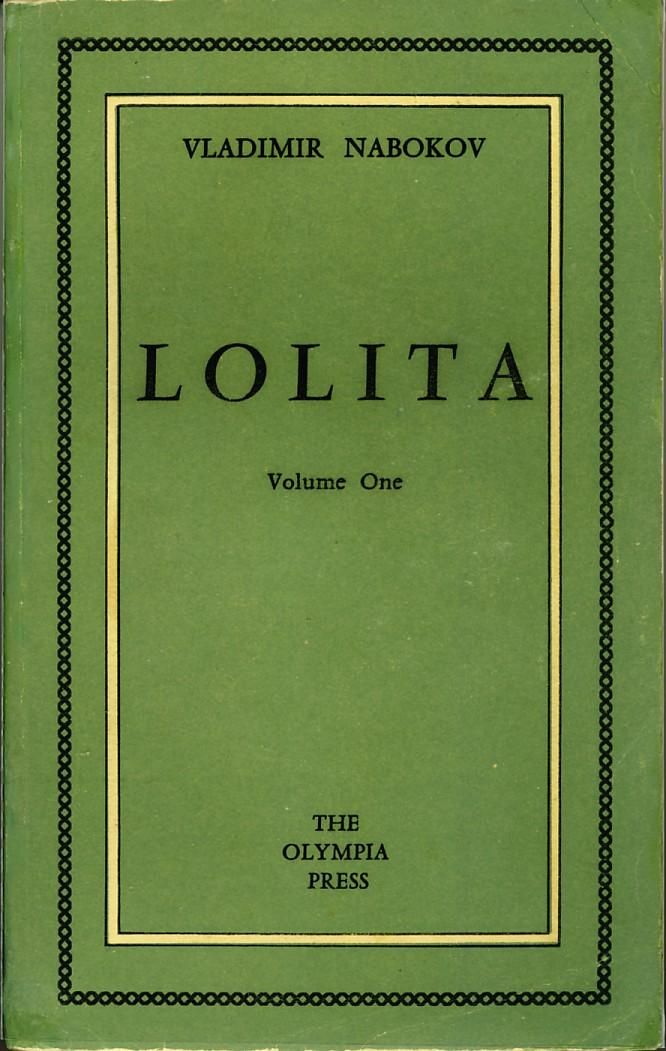 Lolita
"Lovely food, for rabbits, that is."
"One makes mistakes; that is life. But it is never a mistake to have loved."
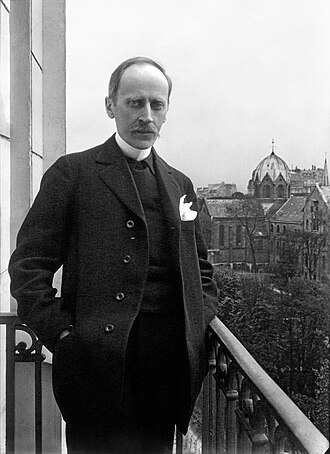 Romain Rolland
"[explaining to Ernie how April apologized to him] She just showed up at the factory, took off her coat, and begged me to take her. We made love in a way that Ive only ever seen in nature films."
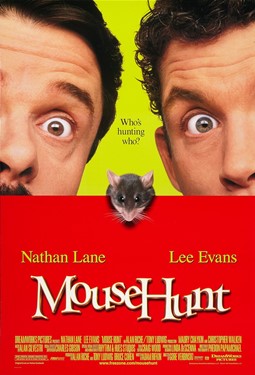 MouseHunt (film)
"Love is always love, come whence it may. A heart that beats at your approach, an eye that weeps when you go away are things so rare, so sweet, so precious that they must never be despised."
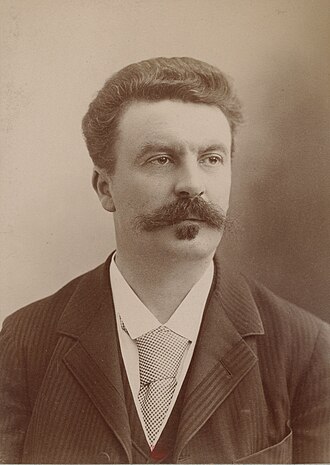 Guy de Maupassant
"He was obeyed, yet he inspired neither love nor fear, nor even respect. He inspired uneasiness. That was it! Uneasiness. Not a definite mistrust — just uneasiness — nothing more. You have no idea how effective such a... a... faculty can be. He had no genius for organizing, for initiative, or for order even. That was evident in such things as the deplorable state of the station. He had no learning, and no intelligence. His position had come to him — why? Perhaps because he was never ill . . . He had served three terms of three years out there . . . Because triumphant health in the general rout of constitutions is a kind of power in itself."