SHAWORDS
E

Ernst Bloch

Ernst Bloch

author ·

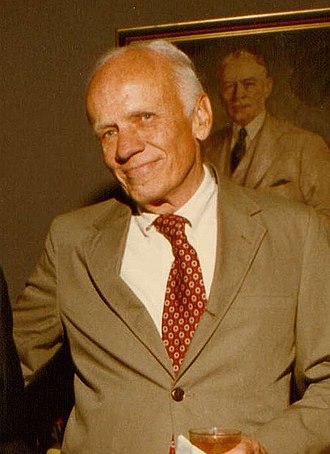
Ernst Simon Bloch was a German Marxist philosopher. Bloch was influenced by Georg Wilhelm Friedrich Hegel and Karl Marx, as well as by apocalyptic and religious thinkers such as Thomas Müntzer, Paracelsus, and Jacob Böhme. He established friendships with György Lukács, Bertolt Brecht, Kurt Weill, Walter Benjamin, and Theodor W. Adorno. Bloch's work focuses on an optimistic teleology of the history

Popular Shayari & Quotes

Quote
"Now to get back to our given Church: it lives almost entirely for modesty and moneyed piety. It zealously inveighs against the harm done to Joseph and the sheep, but it has made its arrangements with the upper classes and serves as their spiritual defender. It bristles at see-through blouses, but not at slums in which half-naked children starve, and not, above all, at the conditions that keep three quarters of mankind in misery. It condemns desperate girls who abort a foetus, but it consecrates war, which aborts millions. It has nationalized its God, nationalized him into ecclesiastic organization, and has inherited the Roman empire under the mask of the Crucified. It preserves misery and injustice, having first tolerated and then approved the class power that causes them; it prevents any seriousness about deliverance by postponing it to St. Never-Evers Day or shifting it to the beyond."
E
Ernst Bloch
Quote
"Gramscis remarks are rich and stimulating, but in the last analysis they follow the classical Marxist pattern of analysing religion. Ernst Bloch was the first Marxist author who radically changed the theoretical framework—without abandoning the Marxist and revolutionary perspective. In a similar way to Engels, he distinguished two socially opposed currents: on one side the theocratic religion of the official churches, opium of the people, a mystifying apparatus at the service of the powerful; on the other the underground, subversive and heretical religion of the Albigensians, the Hussites, Joachim di Fiori, Thomas Münzer, Franz von Baader, Wilhelm Weitling and Leo Tolstoy."
E
Ernst Bloch
Quote
"In ourselves alone the absolute light keeps shining, a sigillum falsi et sui, mortis et vitae aeternae [false signal and signal of eternal life and death itself], and the fantastic move to it begins: to the external interpretation of the daydream, the cosmic manipulation of a concept that is utopian in principle. Finding this concept, finding the right for whose sake it behoves us to live, to be organized, to have time—this is where we are headed, why we are clearing the metaphysically constitutive trails afresh, calling for what is not, building into the blue that lines all edges of the world; this is why we build ourselves into the blue and search for truth and reality where mere factuality vanishes."
E
Ernst Bloch