Quote
"The present stage redefines the possibilities of man and nature in accordance with the new means available for their realization."
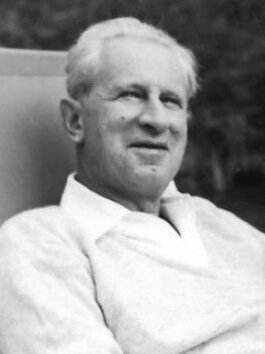 Herbert Marcuse
"This mutual dependencies no longer the dialectical relationship between master and servant, which has been broken in the struggle for mutual recognition, but rather a vicious circle which encloses both the master and the servant. Do the technicians rule, or is their rule that of the others, who rely on the technicians as their planners and executors?"
Herbert Marcuse was a German and American philosopher, social critic, and political theorist, associated with the Frankfurt School of critical theory. Born in Berlin, Marcuse studied at the Friedrich Wilhelm University of Berlin and then at the University of Freiburg, where he received his PhD. He was a prominent figure in the Frankfurt-based Institute for Social Research, which later became known
"The present stage redefines the possibilities of man and nature in accordance with the new means available for their realization."
Herbert Marcuse"The avant-garde and the beatniks share in the function of entertaining without endangering the good conscience of the men of good will."
Herbert Marcuse"Society … can afford to grant more than before because its interests have become the innermost drives of its citizens."
Herbert Marcuse"The real field of knowledge is not the given fact about things as they are, but the critical evaluation of them as a prelude to passing beyond their given form. Knowledge deals with appearances in order to get beyond them. …. The concept of reality has thus turned into the concept of possibility. The real is not yet ‘actual,’ but is at first only the possibility of an actual. P. 145"
Herbert Marcuse"Being is continuous becoming. P. 136"
Herbert Marcuse"Domination has its own aesthetics, and democratic domination has its democratic aesthetics."
Herbert Marcuse"Overtly, I had so-called normal relationships with a number of terrestrial women having pumpkins or pears for breasts; inly, I was consumed by a hell furnace of localized lust for every passing nymphet whom as a law-abiding poltroon I never dared approach. The human females I was allowed to wield were but palliative agents. I am ready to believe that the sensations I derived from natural fornication were much the same as those known to normal big males consorting with their normal big mates in that routine rhythm which shakes the world. The trouble was that those gentlemen had not, and I had, caught glimpses of an incomparably more poignant bliss. The dimmest of my pollutive dreams was a thousand times more dazzling than all the adultery the most virile writer of genius or the most talented impotent might imagine."
 Lolita
"At first when I saw The Sick Child [in his imagination] her pallid face and the vivid red hair against the pillow – I saw something that vanished when I tried to paint it. I ended up with a picture on the canvas which, although I was pleased with it, bore little relationship to what I had seen.. ..In the space of that year [1885 – 1886], scratching it out, just letting the paint flow, endlessly I tried to recapture what I had seen for the first time – the pale transparent skin against the linen sheets, the trembling lips, the shaking hands. I repainted the painting numerous times – scratched it out – let it become blurred in the medium – and tried again and again to catch the first impression – the transparent pale skin against the canvas – the trembling mouth – the trembling hands. I had done the chair [in which his sister Sophie had died] with the glass too often. It distracted me from doing the head. – When I saw the picture I could only make out the glass and the surroundings. – Should I remove it completely? – No, it had the effect of giving depth and emphasis to the head. – I scared off half the background and left everything in masses – one could now see past and across the head and the glass.. .I had achieved much of that first impression, the trembling mouth – the transparent skin – the tired eyes – but the picture was not finished in its colour – it was pale grey – the picture was then heavy as lead. [Munch showed the painting on the Autumn Exhibition 18 October 1886; it was criticized severely, even by his bohemian art-friend Jager]"
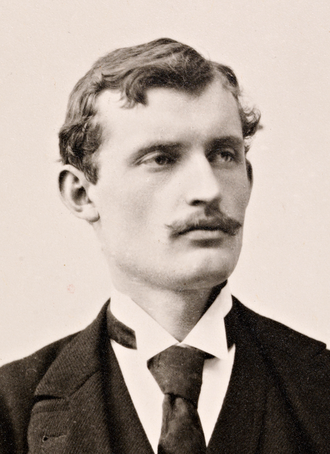 Edvard Munch
"This Conference:... (3) recognises that there are among us persons who experience themselves as having a homosexual orientation. Many of these are members of the Church and are seeking the pastoral care, moral direction of the Church, and Gods transforming power for the living of their lives and the ordering of relationships. We commit ourselves to listen to the experience of homosexual persons and we wish to assure them that they are loved by God and that all baptised, believing and faithful persons, regardless of sexual orientation, are full members of the Body of Christ; (4) while rejecting homosexual practice as incompatible with Scripture, calls on all our people to minister pastorally and sensitively to all irrespective of sexual orientation and to condemn irrational fear of homosexuals"
"These effects of mescalin are the sort of effects you could expect to follow the administration of a drug having the power to impair the efficiency of the cerebral reducing valve. When the brain runs out of sugar, the undernourished ego grows weak, cant be bothered to undertake the necessary chores, and loses all interest in those spatial and temporal relationships which mean so much to an organism bent on getting on in the world. As Mind at Large seeps past the no longer watertight valve, all kinds of biologically useless things start to happen. ... Other persons discover a world of visionary beauty. To others again is revealed the glory, the infinite value and meaningfulness of naked existence, of the given, unconceptualized event."
"Truthfulness under oath is, by now, a matter of our civic religion, our relation to our fellow citizens rather than our relation to a nonhuman power."
"The ideas set forth by organismic biologists during the first half of the twentieth century helped to give birth to a new way of thinking — "systems thinking" — in terms of connectedness, relationships, context. According to the systems view, the essential properties of an organism, or living system, are properties of the whole, which none of the parts have. They arise from the interactions and relationships among the parts. These properties are destroyed when the system is dissected, either physically or theoretically, into isolated elements. Although we can discern individual parts in any system, these parts are not isolated, and the nature of the whole is always different from the mere sum of its parts. The systems view of life is illustrated beautifully and abundantly in the writings of Paul Weiss, who brought systems concepts to the life sciences from his earlier studies of engineering and spent his whole life exploring and advocating a full organismic conception of biology."