Quote
"Web exhibit at the Austrian Central Library for Physics"
E
Erwin Schrödinger"It is not possible that this unity of knowledge, feeling and choice which you call your own should have sprung into being from nothingness at a given moment not so long ago; rather this knowledge, feeling, and choice are essentially eternal and unchangeable and numerically one in all men, nay in all sensitive beings. But not in this sense — that you are a part, a piece, of an eternal, infinite being, an aspect or modification of it... For we should then have the same baffling question: which part, which aspect are you? what, objectively, differentiates it from the others? No, but, inconceiveable as it seems to ordinary reason, you — and all other conscious beings as such — are all in all. Hence, this life of yours... is, in a certain sense, the whole... This, as we know, is what the Brahmins express in that sacred, mystic formula... Tat tvam asi — this is you. Or, again, in such words as I am in the east and in the west, I am below and above, I am this whole world. Thus you can throw yourself flat on the ground, stretched out upon Mother Earth, with certain conviction that you are one with her and she with you … For eternally and always there is only now, one and the same now; the present is the only thing that has no end."
Erwin Rudolf Josef Alexander Schrödinger was an Austrian–Irish theoretical physicist who developed fundamental results in quantum theory. In particular, he is recognized for devising the Schrödinger equation, an equation that provides a way to calculate the wave function of a system and how it changes dynamically in time. He coined the term "quantum entanglement" in 1935. Schrödinger shared the 19
"Web exhibit at the Austrian Central Library for Physics"
"Schrödinger, who was born in Vienna in 1887, was a fascinating man. I met him a few months before he died in 1961. All the inventors of the quantum theory, as it happened, were men of very broad culture, perhaps attributable in part to their European gymnasium educations, but even in this group Schrödinger stood out. He read very widely in a variety of languages, ancient and modern. He was a scientific polymath with a deep interest in Eastern religions. He was also a rather romantic figure who wrote poetry. I was told by that when Schrödinger appeared in 1939 at the Institute for Advanced Study in Dublin, where he had been offered sanctuary during the war, he did so with what Professor Frank referred to as two ‘‘wives.’’ (This was the least of it. Schrödinger had several mistresses, with whom he fathered at least two daughters.)"
"The multiplicity is only apparent. This is the doctrine of the Upanishads. And not of the Upanishads only. The mystical experience of the union with God regularly leads to this view, unless strong prejudices stand in the way."
"Another way of expressing the peculiar situation is: the best possible knowledge of a whole does not necessarily include the best possible knowledge of all its parts, even though they may be entirely separate and therefore virtually capable of being "best possibly known," i.e., of possessing, each of them, a representative of its own. The lack of knowledge is by no means due to the interaction being insufficiently known—at least not in the way that it could possibly be known more completely—it is due to the interaction itself. Attention has recently been called to the obvious but very disconcerting fact that even though we restrict the disentangling measurements to one system, the representative obtained for the other system is by no means independent of the particular choice of observations which we select for that purpose and which by the way are entirely arbitrary. It is rather discomforting that the theory should allow a system to be steered or piloted into one or the other type of state at the experimenters mercy in spite of his having no access to it. [italics in the original]"
"The observing mind is not a physical system, it cannot interact with any physical system. And it might be better to reserve the term "subject" for the observing mind. … For the subject, if anything, is the thing that senses and thinks. Sensations and thoughts do not belong to the "world of energy.""
"Although I think that life may be the result of an accident, I do not think that of consciousness. Consciousness cannot be accounted for in physical terms. For consciousness is absolutely fundamental. It cannot be accounted for in terms of anything else."
"In the life of the mass-order, the culture of the generality tends to conform to the demands of the average human being. Spirituality decays through being diffused among the masses when knowledge is impoverished in every possible way by rationalisation until it becomes accessible to the crude understanding of all."
"The first thing I remember about the world — and I pray that it may be the last — is that I was a stranger in it. This feeling, which everyone has in some degree, and which is, at once, the glory and desolation of homo sapiens, provides the only thread of consistency that I can detect in my life."
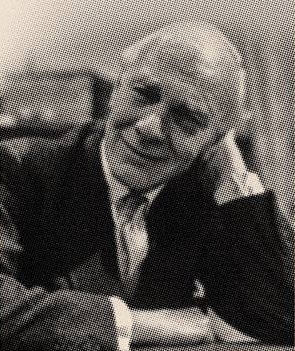 Malcolm Muggeridge
"Jewish custom, which traces descent solely from the mother, is more sensible and more discreet. Our own lawgivers cant accept the fact that there are many things in family life that are best kept shrouded in mystery."
"One makes mistakes; that is life. But it is never a mistake to have loved."
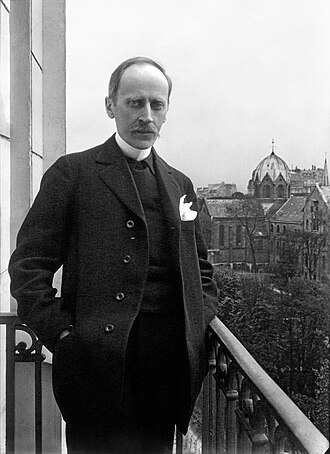 Romain Rolland
"If it fulfills our hopes, this center will be, at once, a symbol and a reflection and a hope. It will symbolize our belief that the world of creation and thought are at the core of all civilization. Only recently in the White House we helped commemorate the 400th anniversary of Shakespeare. The political conflicts and ambitions of his England are known to the scholar and to the specialist. But his plays will forever move men in every corner of the world. The leaders that he wrote about live far more vividly in his words than in the almost forgotten facts of their own rule. Our civilization, too, will largely survive in the works of our creation. There is a quality in art which speaks across the gulf dividing man from man and nation from nation, and century from century. That quality confirms the faith that our common hopes may be more enduring than our conflicting hostilities. Even now men of affairs are struggling to catch up with the insights of great art. The stakes may well be the survival of civilization. The personal preferences of men in government are not important--except to themselves. However, it is important to know that the opportunity we give to the arts is a measure of the quality of our civilization. It is important to be aware that artistic activity can enrich the life of our people, which really is the central object of Government. It is important that our material prosperity liberate and not confine the creative spirit."
"I did not go to join Kurtz there and then. I did not. I remained to dream the nightmare out to the end, and to show my loyalty to Kurtz once more. Destiny. My destiny! Droll thing life is — that mysterious arrangement of merciless logic for a futile purpose. The most you can hope from it is some knowledge of yourself — that comes too late — a crop of unextinguishable regrets. I have wrestled with death. It is the most unexciting contest you can imagine. It takes place in an impalpable grayness, with nothing underfoot, with nothing around, without spectators, without clamor, without glory, without the great desire of victory, without the great fear of defeat, in a sickly atmosphere of tepid skepticism, without much belief in your own right, and still less in that of your adversary. If such is the form of ultimate wisdom, then life is a greater riddle than some of us think it to be. I was within a hairs-breadth of the last opportunity for pronouncement, and I found with humiliation that probably I would have nothing to say. This is the reason why I affirm that Kurtz was a remarkable man. He had something to say. He said it. Since I had peeped over the edge myself, I understand better the meaning of his stare, that could not see the flame of the candle, but was wide enough to embrace the whole universe, piercing enough to penetrate all the hearts that beat in the darkness. He had summed up — he had judged. The horror! He was a remarkable man. After all, this was the expression of some sort of belief; it had candor, it had conviction, it had a vibrating note of revolt in its whisper, it had the appalling face of a glimpsed truth — the strange commingling of desire and hate."