SHAWORDS
🦋
Education

Education

Quote
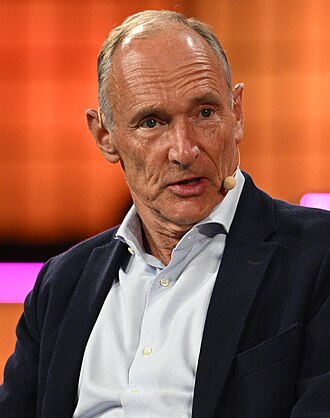
"An [hypertext] encyclopaedia will be an overall attempt by the knowledgeable, the learned societies or anyone else, to represent the state-of-the-art in their field. An encyclopaedia will be a living document, as up to date as it can be, instantly accessible at any time. It will contain carefully authored explanations and summaries of the subject, as well as computer-generated indexes of literature. A reference to a paper from the encyclopaedia conveys authority and acceptance by academic society. A measure of a paper’s standing may be conveyed by the number of links it is away from an encyclopaedia."
Tim Berners-LeeTim Berners-Lee
Quote
"A sample of the modern debate, which neatly summarizes the anti-reductionist position is provided by Grene (1974). She points out that in principle a one-level ontology—the belief, for example, that with increasing knowledge all science will become an account of the world in the language of, say, atomic events—contradicts itself. This is so because such a belief, to be meaningful, requires an ontology which admits both atomic events and cognition. Here at once a second level is smuggled in! It is logically possible... that there might be no levels in between those of atomic events and cognition (that in essence is Descartess position) but the sciences of chemistry and biology consist of some well-tested conjectures that there are such intermediate levels as are represented by molecules, cells, organelles, organs, and organisms."
O
Ontology
Quote
"All competent thinkers agree with Bacon that there can be no real knowledge except that which rests upon observed facts. This fundamental maxim is evidently indisputable if it is applied, as it ought to be, to the mature state of our intelligence. But, if we consider the origin of our knowledge, it is no less certain that the primitive human mind could not, and indeed ought not to, have thought in that way. For if, on the one hand, every Positive theory must necessarily be founded upon observations, it is, on the other hand, no less true that, in order to observe, our mind has need of some theory or other. If in contemplating phenomena we did not immediately connect them with principles, not only would it be impossible for us to combine these isolated observations, and therefore to derive profit from them, but we should even be entirely incapable of remembering facts, which would for the most remain unnoted by us. Thus there were two difficulties be overcome: the human mind had to observe in order to form real theories, and yet had to form theories of some sort before it could apply itself to a connected series of observations. The primitive human mind, therefore, found itself involved in a vicious circle, from which it would never have had any means of escaping, if a natural way of the difficulty had not fortunately found by the spontaneous development of Theological conceptions. ...chimerical hopes ..exaggerated ideas of mans importance in the universe to which the Theological Philosophy ...at the commencement, ...afforded an indispensable stimulus without the aid which we cannot, indeed, conceive how the primitive human mind would have been induced to undertake any arduous labours."
TheoryTheory
Quote
"The knowledge of anything, since all things have causes, is not acquired or complete unless it is known by its causes. Therefore in medicine we ought to know the causes of sickness and health. And because health and sickness and their causes are sometimes manifest, and sometimes hidden and not to be comprehended except by the study of symptoms, we must also study the symptoms of health and disease. Now it is established in the sciences that no knowledge is acquired save through the study of its causes and beginnings, if it has had causes and beginnings; nor completed except by knowledge of its accidents and accompanying essentials. Of these causes there are four kinds: material, efficient, formal, and final."
A
Avicenna
Quote
"Thats... the big discovery of this principle of computational equivalence of mine. ...This is something which is kind of a follow-on to Gödels theorem, to Turings work on the ... that there is this fundamental limitation built into science, this idea of computational irreducibility that says that even though you may know the rules by which something operates, that does not mean that you can readily... be smarter that it and jump ahead and figure out what its going to do."
S
Stephen Wolfram
Quote
"I learned about renormalization theory as a graduate student, mostly by reading Dyson’s papers. ... From the beginning it seemed to me to be a wonderful thing that very few quantum field theories are renormalizable. Limitations of this sort are, after all, what we most want, not mathematical methods which can make sense of an infinite variety of physically irrelevant theories, but methods which carry constraints, because these constraints may point the way toward the one true theory."
TheoryTheory
Quote
"Software manuals must be free, for the same reasons that software must be free, and because the manuals are in effect part of the software. The same arguments also make sense for other kinds of works of practical use — that is to say, works that embody useful knowledge, such as educational works and reference works. Wikipedia is the best-known example. Any kind of work can be free, and the definition of free software has been extended to a definition of free cultural works applicable to any kind of works."
Free softwareFree software
Quote
"I had scarcely entered the room when I saw on my table an open book I had not put there. It was the works of Cardano. I did not intend to read it, but my gaze fell as though compelled on a story told by that philosopher. He writes that he was studying one night by candlelight when he saw two tall old men come in through the closed doors of his room. He asked them many questions, and they finally told him they were from the Moon; whereupon they disappeared. I was so surprised, both by the book that had put itself on my table and by the page it was open to, that I took this chain of events for an inspiration from God, who was urging me to tell people that the Moon is a world."
C
Cyrano de Bergerac
Quote
"The new education has as its purpose the development of a new kind of person, one who — as a result of internalizing a different series of concepts — is an actively inquiring, flexible, creative, innovative, tolerant, liberal personality who can face uncertainty and ambiguity without disorientation, who can formulate viable new meanings to meet changes in the environment which threaten individual and mutual survival. The new education, in sum, is new because it consists of having students use the concepts most appropriate to the world in which we all must live. All of these concepts constitute the dynamics of the quest-questioning, meaning-making process that can be called "learning how to learn."
N
Neil Postman
Quote
"In the development of intelligence nothing can be more "basic" than learning how to ask productive questions. Many years ago, in Teaching as a Subversive Activity, Charles Weingartner and I expressed our astonishment at the neglect shown in school toward this language art. ...The "back to the basics" philosophers rarely mention it, and practicing teachers usually do not find room for it in their curriculums. …all our knowledge results from questions, which is another way of saying that question-asking is our most important intellectual tool… There are at present no reading tests anywhere that measure the ability of students to address probing questions to the particular texts they are reading... What students need to know are the rules of discourse which comprise the subject, and among the most central of such rules are those which govern what is and what is not a legitimate question."
N
Neil Postman
Quote
"Birds are extraordinary creatures by almost any measure. But they are especially impressive when we are so brash as to compare them to ourselves in their astonishingly diverse ways of becoming parents and of parenting. We need three or four decades to accomplish what birds of many species routinely accomplish in less than a month—court, mate, build a nest, lay from one to about twenty eggs, incubate them, and then feed and protect them to adulthood. In some cases birds also provider their offsprings education. They may have to tens of thousands of miles just to start the nesting season."
B
Bernd Heinrich
Quote
"In her book, Philosophy in a New Key, Susanne Langer remarks that certain ideas burst upon the intellectual landscape with a tremendous force. They resolve so many fundamental problems at once that they seem also to promise that they will resolve all fundamental problems, clarify all obscure issues. Everyone snaps them up as the open sesame of some new positive science, the conceptual center-point around which a comprehensive system of analysis can be built. The sudden vogue of such a grande ideé, crowding out almost everything else for a while, is due, she says, “to the fact that all sensitive and active minds turn at once to exploiting it. We try it in every connection, for every purpose, experiment with possible stretches of its strict meaning, with generalizations and derivatives.”"
Clifford GeertzClifford Geertz