SHAWORDS
🎯
Study

Study

Quote
"The knowledge of anything, since all things have causes, is not acquired or complete unless it is known by its causes. Therefore in medicine we ought to know the causes of sickness and health. And because health and sickness and their causes are sometimes manifest, and sometimes hidden and not to be comprehended except by the study of symptoms, we must also study the symptoms of health and disease. Now it is established in the sciences that no knowledge is acquired save through the study of its causes and beginnings, if it has had causes and beginnings; nor completed except by knowledge of its accidents and accompanying essentials. Of these causes there are four kinds: material, efficient, formal, and final."
A
Avicenna
Quote
"I had scarcely entered the room when I saw on my table an open book I had not put there. It was the works of Cardano. I did not intend to read it, but my gaze fell as though compelled on a story told by that philosopher. He writes that he was studying one night by candlelight when he saw two tall old men come in through the closed doors of his room. He asked them many questions, and they finally told him they were from the Moon; whereupon they disappeared. I was so surprised, both by the book that had put itself on my table and by the page it was open to, that I took this chain of events for an inspiration from God, who was urging me to tell people that the Moon is a world."
C
Cyrano de Bergerac
Quote
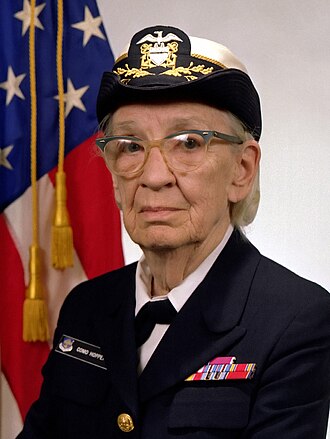
"We must include in any language with which we hope to describe complex data-processing situations the capability for describing data. We must also include a mechanism for determining the priorities to be applied to the data. These priorities are not fixed and are indicated in many cases by the data. Thus we must have a language and a structure that will take care of the data descriptions and priorities, as well as the operations we wish to perform. If we think seriously about these problems, we find that we cannot work with procedures alone, since they are sequential. We need to define the problem instead of the procedures. The Language Structures Group of the Codasyl Committee has been studying the structure of languages that can be used to describe data-processing problems. The Group started out by trying to design a language for stating procedures, but soon discovered that what was really required was a description of the data and a statement of the relationships between the data sets. The Group has since begun writing an algebra of processes, the background for a theory of data processing. Clearly, we must break away from the sequential and not limit the computers. We must state definitions and provide for priorities and descriptions of data. We must state relationships, not procedures."
Grace HopperGrace Hopper
Quote
"Intelligent design (ID) is a scientific theory that employs the methods commonly used by other historical sciences to conclude that certain features of the universe and of living things are best explained by an intelligent cause, not an undirected process such as natural selection. ID theorists argue that design can be inferred by studying the informational properties of natural objects to determine if they bear the type of information that in our experience arise from an intelligent cause."
I
Intelligent design
Quote
"Schrödinger, who was born in Vienna in 1887, was a fascinating man. I met him a few months before he died in 1961. All the inventors of the quantum theory, as it happened, were men of very broad culture, perhaps attributable in part to their European gymnasium educations, but even in this group Schrödinger stood out. He read very widely in a variety of languages, ancient and modern. He was a scientific polymath with a deep interest in Eastern religions. He was also a rather romantic figure who wrote poetry. I was told by that when Schrödinger appeared in 1939 at the Institute for Advanced Study in Dublin, where he had been offered sanctuary during the war, he did so with what Professor Frank referred to as two ‘‘wives.’’ (This was the least of it. Schrödinger had several mistresses, with whom he fathered at least two daughters.)"
E
Erwin Schrödinger
Quote
"Neglected as psychology now is, and with the strangely chaotic state in which physiology is confessed to be by its most fair students, certainly it is not very likely that our men of science will soon rediscover the lost knowledge of the ancients. In the days of old, when prophets were not treated as charlatans, nor thaumaturgists as impostors, there were colleges instituted for teaching prophecy and occult sciences in general. Samuel is recorded as the chief of such an institution at Ramah; Elisha, also, at Jericho. The schools of hazim, prophets or seers, were celebrated throughout the country. Hillel had a regular academy, and Socrates is well known to have sent away several of his disciples to study manticism. The study of magic, or wisdom, included every branch of science, the metaphysical as well as the physical, psychology and physiology in their common and occult phases, and the study of alchemy was universal, for it was both a physical and a spiritual science. Therefore why doubt or wonder that the ancients, who studied nature under its double aspect, achieved discoveries which to our modern physicists, who study but its dead letter, are a closed book?"
PsychologyPsychology
Quote
"Since most subjects studied in school consist largely of theories... language education must include not only the serious study of what truth and falsehood mean in the context of a subject, but also what is meant by a fact, an inference, an assumption, a judgment, a generalization... In this way students will be learning both the language of a subject and the methods of inquiry in that subject, since inquiry consists of nothing else but the generation of questions, the invention of definitions and metaphors, the separation of facts from inferences, the forming of generalizations..."
N
Neil Postman
Quote
"In biology the Cartesian view of living organisms as machines, constructed from separate parts, still provides the dominant conceptual framework. Although Descartes simple mechanistic biology could not be carried very far and had to be modified considerably during the subsequent three hundred years, the belief that all aspects of living organisms can be understood by reducing them to their smallest constituents, and by studying the mechanisms through which these interact, lies at the very basis of most contemporary biological thinking. This passage from a current textbook on modern biology is a clear expression of the reductionist credo: One of the acid tests of understanding an object is the ability to put it together from its component parts. Ultimately, molecular biologists will attempt to subject their understanding of cell structure and function to this sort of test by trying to synthesize a cell."
F
Fritjof Capra
Quote
"What I am trying to do is to present a unified scientific view of life; that is, a view integrating lifes biological, cognitive, and social dimensions. I have had many discussions with social scientists, cognitive scientists, physicists and biologist who question that task, who said that this would not be possible. They ask, why do I believe that I can do that? My belief is based largely on our knowledge of evolution. When you study evolution, you see that there was, first of all, evolution before the appearance of life, there was a molecular type of evolution where structures of greater and greater complexity evolved out of simple molecules. Biochemist who study that have made tremendous progress in understanding that process of molecular evolution. Then we had the appearance of the first cell which was a bacterium. Bacteria evolved for about 2 billion years and in doing so invented, if you want to use the term, or created most of the life processes that we know today. Biochemical processes like fermentation, oxygen breathing, photosynthesis, also rapid motion, were developed by bacteria in evolution. And what happened then was that bacteria combined with one another to produce larger cells — the so-called eukaryotic cells, which have a nucleus, chromosomes, organelles, and so on. This symbiosis that led to new forms is called symbiogenesis."
F
Fritjof Capra
Quote
"I observe that while several modern writers deal with particular wars and certain matters connected with them, no one, as far as I am aware, has even attempted to inquire critically when and whence the general and comprehensive scheme of events originated and how it led up to the end. I therefore thought it quite necessary not to leave unnoticed or allow to pass into oblivion this the finest and most beneficent of the performances of Fortune. For though she is ever producing something new and ever playing a part in the lives of men, she has not in a single instance ever accomplished such a work, ever achieved such a triumph, as in our own times. We can no more hope to perceive this from histories dealing with particular events than to get at once a notion of the form of the whole world, its disposition and order, by visiting, each in turn, the most famous cities, or indeed by looking at separate plans of each: a result by no means likely. He indeed who believes that by studying isolated histories he can acquire a fairly just view of history as a whole, is, as it seems to me, much in the case of one, who, after having looked at the dissevered limbs of an animal once alive and beautiful, fancies he has been as good as an eyewitness of the creature itself in all its action and grace."
P
Polybius
Quote
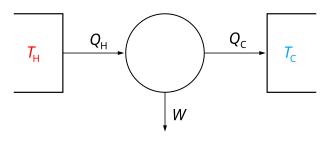
"Newton and his theories were a step ahead of the technologies that would define his age. Thermodynamics, the grand theoretical vision of the nineteenth century, operated in the other direction with practice leading theory. The sweeping concepts of energy, heat, work and entropy, which thermodynamics (and its later form, statistical mechanics) would embrace, began first on the shop floor. Originally the domain of engineers, thermodynamics emerged from their engagement with machines. Only later did this study of heat and its transformation rise to the heights of abstract physics and, finally, to a new cosmological vision."
ThermodynamicsThermodynamics
Quote
"Utility and necessity of logic - It would be a mistake to imagine that, above and beyond what is called the Natural Logic of sound common sense, the study of the Science of Logic is absolutely necessary for right reasoning. Men reasoned rightly before Aristotle ever formulated a canon of logic. It was, in fact, by an analysis of such reasonings that he discovered those canons: they could never have been discovered otherwise. Here as elsewhere the art came before the science; theory followed practice. A man may reason rightly without knowing a single rule of the syllogism; or, conversely, he may know all the details of logic and be an indifferent guide to truth just as a first-rate geometrician may be a failure as an engineer. But still, just as his knowledge of geometry will enable the geometrician to detect the defects in a piece of engineering, so too will an explicit knowledge of the canons of reasoning enable us to discover more readily where the fallacy of a misleading argument lies. Without professing to guard us infallibly from error, logic familiarizes us with the rules and canons to which right reasoning processes must conform, and with the hidden fallacies and pitfalls to which such processes are commonly exposed."
L
Logic
Quote
"Nobody, so far as I can see, is making use of those elements in the air which give direction and motivation to our lives. Only the killers seem to be extracting from life some satisfactory measure of what they are putting into it. The age demands violence, but we are getting only abortive explosions. Revolutions are nipped in the bud or else succeed too quickly. Passion is quickly exhausted. Men fall back on ideas, comme dhabitude. Nothing is proposed that can last more than twenty four hours. We are living a million lives in the space of a generation. In the study of entomology, or deep sea life, or cellular activity, we derive more..."
Tropic of CancerTropic of Cancer