Quote
"Neither angel, nor archangel, nor yet even the Lord Himself (who alone can say "I am with you"), can, when we have sinned, release us, unless we bring repentance with us."
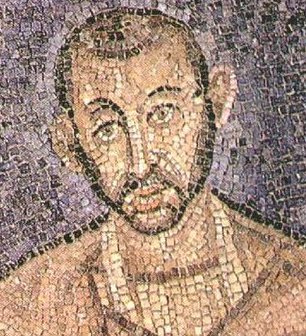 Ambrose
"It was not by dialectic that it pleased God to save His people."
Ambrose of Milan, canonized as Saint Ambrose, was a theologian and statesman who served as Bishop of Milan from 374 to 397.
"Neither angel, nor archangel, nor yet even the Lord Himself (who alone can say "I am with you"), can, when we have sinned, release us, unless we bring repentance with us."
Ambrose"Accordingly, death is a harbor of peace for the just, but is believed a shipwreck for the wicked."
Ambrose"When I am here I do not fast on Saturday; but when I am at Rome I do: whatever church you may come to, conform to its custom, if you would avoid either receiving or giving offense."
Ambrose"It is not death therefore that is burdensome, but the fear of death."
Ambrose"Si fueris Romae, Romano vivito more; Si fueris alibi, vivito sicut ibi."
Ambrose"Christ has taken obedience upon Himself, obedience even to taking on Him our flesh, the cross even to gaining our salvation. Thus where the work lies, there too is the Author of the work. When therefore, all things have become subject to Christ, through Christs obedience, so that all bend their knees in His name, then He Himself will be all in all. For now, since all do not believe, all do not seem to be in subjection. But when all have believed and done the will of God, then Christ will be all and in all. And when Christ is all and in all, then will God be all and in all (1 Cor 15:28); for the Father abides ever in the Son."
Ambrose"I say this to you because we Spaniards are a forgetful people, because we are used to living for the moment, because we do not look back, because we do not know how to see the chain of heroes, because we do not contemplate the sum of sacrifices."
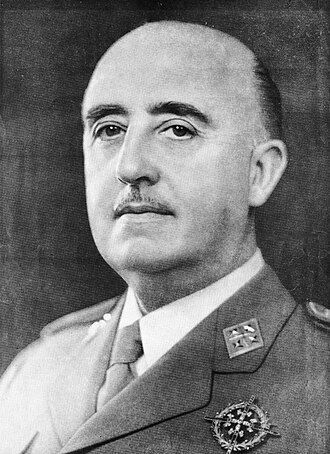 Francisco Franco
"If it fulfills our hopes, this center will be, at once, a symbol and a reflection and a hope. It will symbolize our belief that the world of creation and thought are at the core of all civilization. Only recently in the White House we helped commemorate the 400th anniversary of Shakespeare. The political conflicts and ambitions of his England are known to the scholar and to the specialist. But his plays will forever move men in every corner of the world. The leaders that he wrote about live far more vividly in his words than in the almost forgotten facts of their own rule. Our civilization, too, will largely survive in the works of our creation. There is a quality in art which speaks across the gulf dividing man from man and nation from nation, and century from century. That quality confirms the faith that our common hopes may be more enduring than our conflicting hostilities. Even now men of affairs are struggling to catch up with the insights of great art. The stakes may well be the survival of civilization. The personal preferences of men in government are not important--except to themselves. However, it is important to know that the opportunity we give to the arts is a measure of the quality of our civilization. It is important to be aware that artistic activity can enrich the life of our people, which really is the central object of Government. It is important that our material prosperity liberate and not confine the creative spirit."
"There was a man and he had eight sons. Apart from that, he was nothing more than a comma on the page of History. Its sad, but thats all you can say about some people."
"Children must be free to think in all directions irrespective of the peculiar ideas of parents who often seal their childrens minds with preconceived prejudices and false concepts of past generations. Unless we are very careful, very careful indeed, and very conscientious, there is still great danger that our children may turn out to be the same kind of people we are."
"I hear people say I swing at bad pitches. What is a bad pitch? If I can hit it, its not a bad pitch."
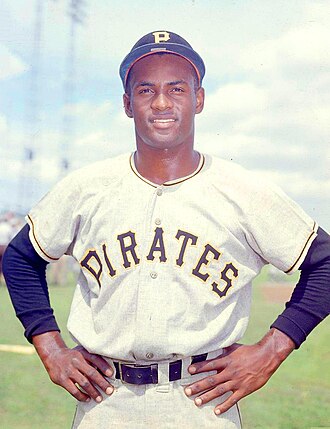 Roberto Clemente
"A free people will always refuse to put up with preventable poverty. If freedom is to be saved and enlarged, poverty must be ended. There is no other solution. The problem of how to prevent these three forces from coming into head-on collision is the principal study of the more politically conscious Conservative leaders. How can wealth persuade poverty to use its political freedom to keep wealth in power? Here lies the whole art of Conservative politics in the twentieth century."