SHAWORDS

I learned about renormalization theory as a graduate student, mostly b — Theory

HomeTheoryQuote
"I learned about renormalization theory as a graduate student, mostly by reading Dyson’s papers. ... From the beginning it seemed to me to be a wonderful thing that very few quantum field theories are renormalizable. Limitations of this sort are, after all, what we most want, not mathematical methods which can make sense of an infinite variety of physically irrelevant theories, but methods which carry constraints, because these constraints may point the way toward the one true theory."
Theory
Theory
Theory
author41 quotes

A theory is, in general, any hypothesis or set of ideas about something, formed in any number of ways through any sort of reasoning for any sort of reason.

More by Theory

View all →
Quote
"All competent thinkers agree with Bacon that there can be no real knowledge except that which rests upon observed facts. This fundamental maxim is evidently indisputable if it is applied, as it ought to be, to the mature state of our intelligence. But, if we consider the origin of our knowledge, it is no less certain that the primitive human mind could not, and indeed ought not to, have thought in that way. For if, on the one hand, every Positive theory must necessarily be founded upon observations, it is, on the other hand, no less true that, in order to observe, our mind has need of some theory or other. If in contemplating phenomena we did not immediately connect them with principles, not only would it be impossible for us to combine these isolated observations, and therefore to derive profit from them, but we should even be entirely incapable of remembering facts, which would for the most remain unnoted by us. Thus there were two difficulties be overcome: the human mind had to observe in order to form real theories, and yet had to form theories of some sort before it could apply itself to a connected series of observations. The primitive human mind, therefore, found itself involved in a vicious circle, from which it would never have had any means of escaping, if a natural way of the difficulty had not fortunately found by the spontaneous development of Theological conceptions. ...chimerical hopes ..exaggerated ideas of mans importance in the universe to which the Theological Philosophy ...at the commencement, ...afforded an indispensable stimulus without the aid which we cannot, indeed, conceive how the primitive human mind would have been induced to undertake any arduous labours."
TheoryTheory
Quote
"When a theory is transformed into an ideology, it begins to destroy the self and self-knowledge. Originally born of feeling, it pretends to float above and around feeling. Above sensation. It organizes experience according to itself, without touching experience. By virtue of being itself, it is supposed to know. To invoke the name of this ideology is to confer truthfulness. No one can tell it anything new. Experience ceases to surprise it, inform it, transform it. It is annoyed by any detail which does not fit into its world view. Begun as a cry against the denial of truth, now it denies any truth which does not fit into its scheme. Begun as a way to restore ones sense of reality, now it attempts to discipline real people, to remake natural beings after its own image. All that it fails to explain it records as its enemy. Begun as a theory of liberation, it is threatened by new theories of liberation; it builds a prison for the mind."
TheoryTheory
Quote
"It is clear that the arm of criticism cannot replace the criticism of arms. Material force can only be overthrown by material force, but theory itself becomes a material force when it has seized the masses. Theory is capable of seizing the masses when it demonstrates ad hominem, and it demonstrates ad hominem as soon as it becomes radical. To be radical is to grasp things by the root. But for man the root is man himself. What proves beyond doubt the radicalism of German theory, and thus its practical energy, is that it begins from the resolute positive abolition of religion. The criticism of religion ends with the doctrine that man is the supreme being for man. It ends, therefore, with the categorical imperative to overthrow all those conditions in which man is an abased, enslaved, abandoned, contemptible being—conditions which can hardly be better described than in the exclamation of a Frenchman on the occasion of a proposed tax upon dogs: Wretched dogs! They want to treat you like men!"
TheoryTheory

More on Dua

View all →
Quote
"Glen is not a homosexual. Glen is a transvestite, but he is not a homosexual. Transvestism is the term given by medical science to those persons who desperately wish to wear the clothing of the opposite sex, yet whose sex life in all instances remains quite normal. Would you be surprised to know that this rough, tough individual is wearing pink, satin undies under his rough exterior clothing? He is. Then there is your friend the milkman who...who knows how to find comfort at home."
G
Glen or Glenda
Quote
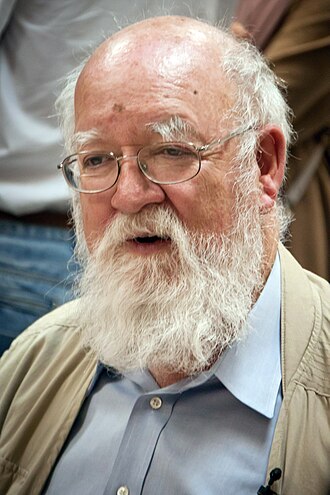
"In a Thumbnail Sketch here is [the Multiple Drafts theory of consciousness] so far:There is no single, definitive "stream of consciousness," because there is no central Headquarters, no Cartesian Theatre where "it all comes together" for the perusal of a Central Meaner. Instead of such a single stream (however wide), there are multiple channels in which specialist circuits try, in parallel pandemoniums, to do their various things, creating Multiple Drafts as they go. Most of these fragmentary drafts of "narrative" play short-lived roles in the modulation of current activity but some get promoted to further functional roles, in swift succession, by the activity of a virtual machine in the brain. The seriality of this machine (its "von Neumannesque" character) is not a "hard-wired" design feature, but rather the upshot of a succession of coalitions of these specialists.The basic specialists are part of our animal heritage. They were not developed to perform peculiarly human actions, such as reading and writing, but ducking, predator-avoiding, face-recognizing, grasping, throwing, berry-picking, and other essential tasks. They are often opportunistically enlisted in new roles, for which their talents may more or less suit them. The result is not bedlam only because the trends that are imposed on all this activity are themselves part of the design. Some of this design is innate, and is shared with other animals. But it is augmented, and sometimes even overwhelmed in importance, by microhabits of thought that are developed in the individual, partly idiosyncratic results of self-exploration and partly the predesigned gifts of culture. Thousands of memes, mostly borne by language, but also by wordless "images" and other data structures, take up residence in an individual brain, shaping its tendencies and thereby turning it into a mind."
Daniel DennettDaniel Dennett
Quote
"While our primary goal is to maintain the most powerful military force in the world at the lowest possible cost, we will never be unmindful of those communities and individuals who are temporarily affected by changes in the pattern of Defense spending. Men and women, who have devoted their lives and their resources to the needs of their country, are entitled to help and consideration in making the transition to other pursuits. We will continue to help local communities by mobilizing and coordinating all the resources of the Federal Governments to overcome temporary difficulties created by the curtailment of any Defense activity. We will phase out unnecessary Defense operations in such a way as to lessen the impact on any community, and we will work with local communities to develop energetic programs of self-help, calling on the resources of state and local governments--and of private industry--as well as those of the Federal Government. There is ample evidence that such measures can succeed. Former military bases are now in use throughout the country in communities which have not only adjusted to necessary change, but have created greater prosperity for themselves as a result. Their accomplishments are a tribute to the ingenuity of thousands of our citizens, and a testimony to the strength and resiliency of our economy and our system of government."
L
Lyndon B. Johnson
Quote
"Are people naturally destructive, immoral, predatory and self-seeking, only to be kept in order by harsh laws and fiercely deterrent mandatory sentences? Or are men and women naturally orderly, merciful, humane and bred with a need for justice and mutual aid? Of course these qualities, or defects, are not evenly distributed, and undoubtedly there is much of each in all of us, but when it comes to the law some sort of distinction can be drawn. Are you a Shylock or a Bassanio? Shylock pinned his faith on the words in the contract, the nature of his bond and the duty of the state to uphold the letter of the law regardless of human suffering. Bassanio put another point of view. More important than the sanctity of the law was the plight of the individual parties in the particular case."
J
John Mortimer
Quote
"Viewed in the light of such facts, we may conclude slavery to have been the occasion of the increase of human feeling among the Negroes. The doctrine which we deduce from this condition of slavery among the Negroes, and which constitutes the only side of the question that has an interest for our inquiry, is that which we deduce from the Idea: viz., that the “Natural condition” itself is one of absolute and thorough injustice – contravention of the Right and Just. Every intermediate grade between this and the realization of a rational State retains – as might be expected – elements and aspects of injustice; therefore we find slavery even in the Greek and Roman States, as we do serfdom down to the latest times. But thus existing in a State, slavery is itself a phase of advance from the merely isolated sensual existence – a phase of education – a mode of becoming participant in a higher morality and the culture connected with it. Slavery is in and for itself injustice, for the essence of humanity is Freedom; but for this man must be matured. The gradual abolition of slavery is therefore wiser and more equitable than its sudden removal."
G
Georg Wilhelm Friedrich Hegel